Brown and Brookhaven partnership accelerates Northeast research
Academic and national lab powerhouse positions the region as a leading hub for scientific innovation.
PROVIDENCE, R.I. [Brown University] — Brown University and Brookhaven Science Associates, LLC (BSA), manager of the U.S. Department of Energy’s (DOE) Brookhaven National Laboratory in New York, have formed a research partnership to encourage intellectual exchange and support DOE’s mission to secure the nation's safety and prosperity through innovative science and technology. BSA is a partnership between Battelle and Stony Brook University.
On June 26, 2025, the two organizations signed a Memorandum of Understanding (MOU) to facilitate collaborative programs, advance joint research projects, and strengthen the Northeast regional science, technology, engineering, and mathematics (STEM) ecosystems.
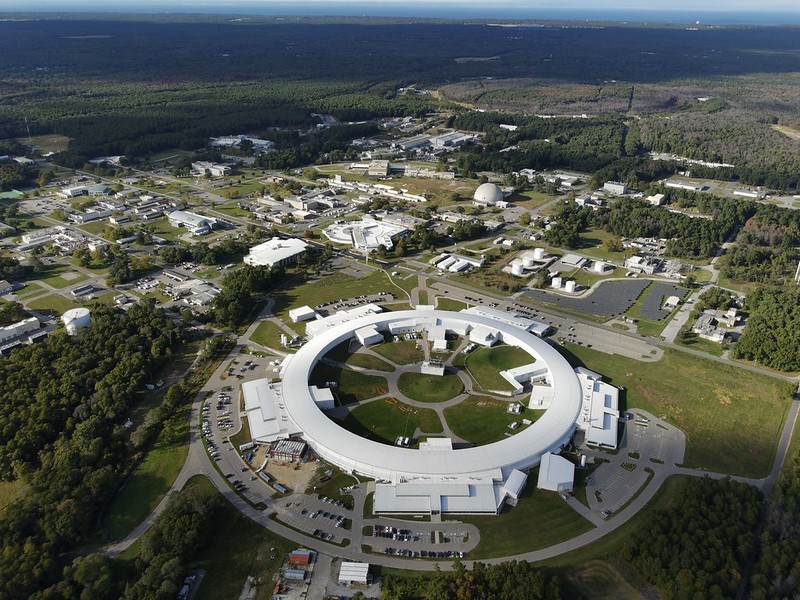
“This is our first MOU with Brookhaven Lab, the closest national lab to Brown,” said Edel Minogue, senior director of Research Strategy and Development in the Division of Research. “The MOU highlights the significance of this partnership, signaling institutional support for our faculty’s collaborative efforts. It also opens doors for exchanges, such as joint appointments between Brookhaven and Brown.”
Brookhaven Lab, one of the Department of Energy’s 17 National Laboratories nationwide, covers 5,000 acres on eastern Long Island. Founded in 1947 on the site of the former US Army’s Camp Upton, it has achieved seven Nobel Prize-winning discoveries and has a long history of pioneering research spanning over 78 years.
The national labs are specialized research centers focused on addressing key national priorities, including supercomputing, quantum science, nuclear and particle physics, cancer research, biotechnology, fusion energy, and artificial intelligence. Their instruments, resources, and capabilities are unmatched by any other academic institution.
Brookhaven Lab, for example, has facilities for conducting advanced materials science and studying chemical reactions at the smallest scales, such as the National Synchrotron Light Source II and the Accelerator Test Facility, enabling experiments that would otherwise be impossible. Scientists from around the world utilize these and other cutting-edge facilities at Brookhaven to push the boundaries of scientific discovery.
“Building collaborations with national labs allows faculty to access these facilities and resources, and enables students to participate as interns, develop projects, and potentially pursue careers there,” said Minogue.
Shared priorities, new opportunities
“The national labs are making significant investments in AI, quantum science, and materials science, which are all priorities for Brown,” said Vice President for Research Greg Hirth. “Brown has just appointed our first Associate Provost for AI and has built a substantial team working in quantum and materials science across engineering, chemistry, and physics. There is a natural alignment of goals between Brown and Brookhaven."
The collaboration with Brookhaven provides Brown faculty with research opportunities beyond those supported by the NSF and NIH. The Department of Energy (DOE) funds more than just energy research. From AI, quantum science, and energy security to structural biology, DOE supports a broad range of emerging research areas at the Brookhaven lab.
“Several Brown faculty members, particularly in physics and engineering, have an established record of collaborating with DOE labs,” said Minogue. “Through this MOU, we hope to build on those relationships with Brookhaven and introduce more faculty and students to new collaborative research opportunities that are a priority to Brown and critical to the nation.”
A key benefit of the MOU for both institutions is workforce development for the national labs, which are facing an aging staff and the need for future leadership. “To create a pipeline of future national lab scientists, the labs need to establish collaborations with universities, such as Brown, so students are aware of the research conducted there and the careers they can pursue beyond graduation,” said Minogue.
From campus tours to strategic alliances
The origins of the MOU date back to a National Labs Day on April 19, 2024, hosted by the Research Strategy and Development team in the Division of Research, in collaboration with Brown’s School of Engineering. Staff scientists from Brookhaven attended, along with representatives from six other national laboratories. The event featured tours of Brown’s research facilities and labs, showcasing the University’s work in engineering, physics, and chemistry.
Nine months later, Hirth and Minogue led a team of 11 Brown scientists to Brookhaven National Laboratory to tour key research facilities, connect with Brookhaven scientists, and explore new opportunities for interdisciplinary collaboration. The trip was a resounding success, leading to some promising new collaborations (including a project on earthquake processes involving Hirth’s own research team in DEEPS).
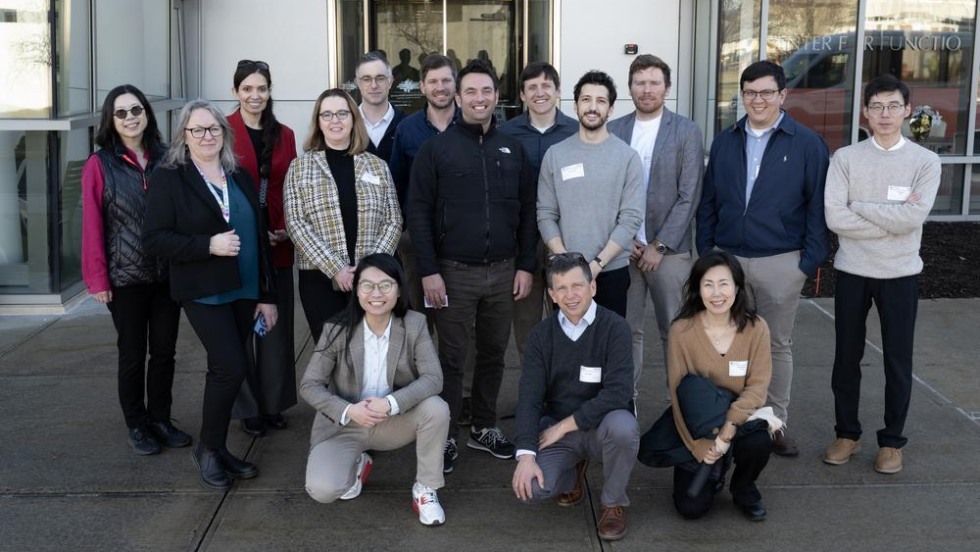
Brown University Researchers at BNL; Faculty tour CFN and NSLS-II. (Brookhaven National Lab)
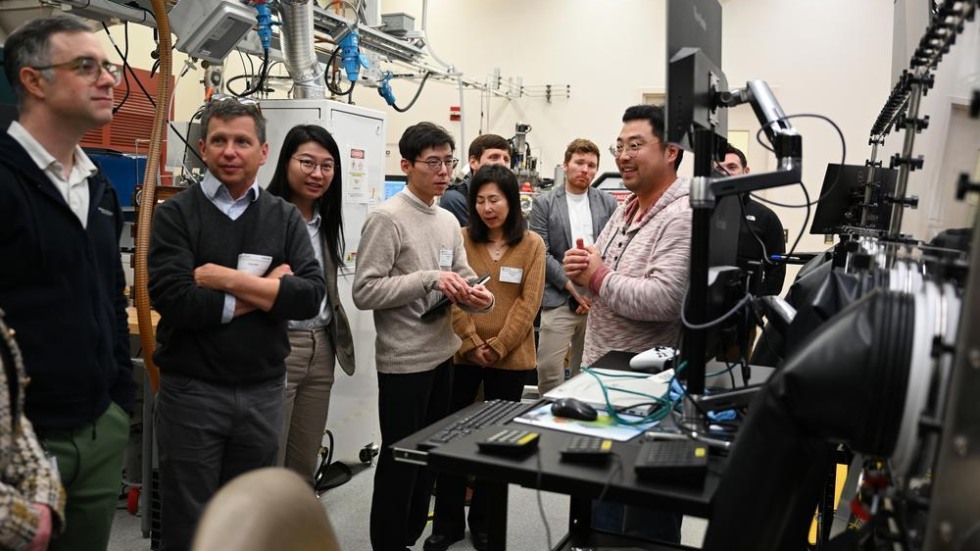
Brown University Researchers at BNL; Faculty tour CFN and NSLS-II. (Brookhaven National Lab)
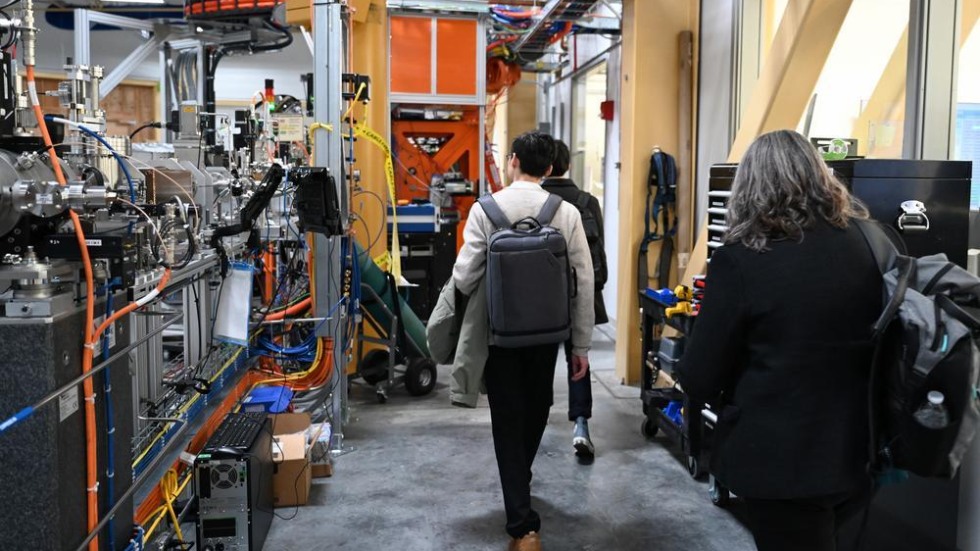
Brown University Researchers at BNL; Faculty tour CFN and NSLS-II. (Brookhaven National Lab)
“The opportunity to brainstorm about potential collaborations in person with the BNL scientists, and the enthusiasm exuded by the faculty on our return trip to Providence, really highlighted the potential impact of an MOU,” said Hirth.
Discussions continued, and the signing of the MOU in June marked the culmination of the Research Strategy and Development team’s efforts to reach a goal they had pursued for years. Beyond assisting faculty with research proposals, the team also works to initiate and facilitate strategic alliances between Brown and key partners, such as national laboratories, to create new research opportunities.
“It was great to be able to meet with Brown faculty and students during National Labs Day and the follow-up visit to Brookhaven, and I was very impressed by their high level of enthusiasm and interest,” said Brookhaven’s Associate Laboratory Director for Basic Energy Sciences Jim Misewich. “We are excited to work with them - hopefully to initiate long-term collaborations, but also to provide Brown’s students with the experience of working closely with a national lab early in their research careers.”
For information about research opportunities at Brookhaven National Laboratory, please contact the Research Strategy and Development team in the Division of Research or email orsd@bnl.gov.