Innovation@Brown Showcase powers Rhode Island’s startup scene
Third annual event at the Cambridge Innovation Center brought together founders, partners, and innovators driving the next wave of discovery.
PROVIDENCE, R.I. [Brown University] — From groundbreaking research to daring new ventures, innovation at Brown thrives on turning ideas into impact. That spirit came to life at the Cambridge Innovation Center (CIC) in Providence on September 25, 2025, as the community gathered for the third annual Innovation@Brown Showcase—a celebration of entrepreneurship, collaboration, and the pursuit of what’s next in science, technology, and human-centered design.
This year’s showcase—attended by more than 200 investors, inventors, and entrepreneurs—featured thought-provoking talks on the power of innovation ecosystems, the promise of investing in university startups, and the growing role of AI agents in mental health. The event also included a pitch competition, a venture showcase highlighting 18 startups led by Brown faculty inventors and entrepreneurs, and an awards ceremony recognizing Brown Technology Innovations’ Startup of the Year, Inventor of the Year, and Innovation of the Year.
Pitch Competition Photo Gallery
View the complete photo gallery from the inaugural Pitch Competition.
Brown’s growing role in innovation
The Showcase opened with reflections on how Brown’s expanding research enterprise is fueling innovation across disciplines. Vice President for Research Greg Hirth highlighted the University’s growing leadership in entrepreneurship, the life sciences, and artificial intelligence—areas driving innovation across campus.
“Brown University now ranks seventh among private universities in North America for startup dollars raised by alumni,” Hirth said, citing a recent PitchBook report that places Brown ahead of many larger institutions. “That’s a testament to the entrepreneurial drive of our students and graduates.”
Hirth also pointed to key developments shaping Brown’s research future: the construction of the Danoff Life Sciences Laboratories—a seven-story hub designed to foster collaboration between engineering and life sciences researchers—and a new partnership with Portal Innovations to establish Ocean State Labs in Providence, providing vital infrastructure and investment for early-stage life sciences ventures.
Ventures driving discovery to impact
From institutional vision to hands-on entrepreneurship, the spirit of innovation was on full display at the Showcase’s venture tables. The venture tables—always a Showcase highlight—connect investors and entrepreneurs with Brown innovators driving advances in health, life sciences, and biotechnology.
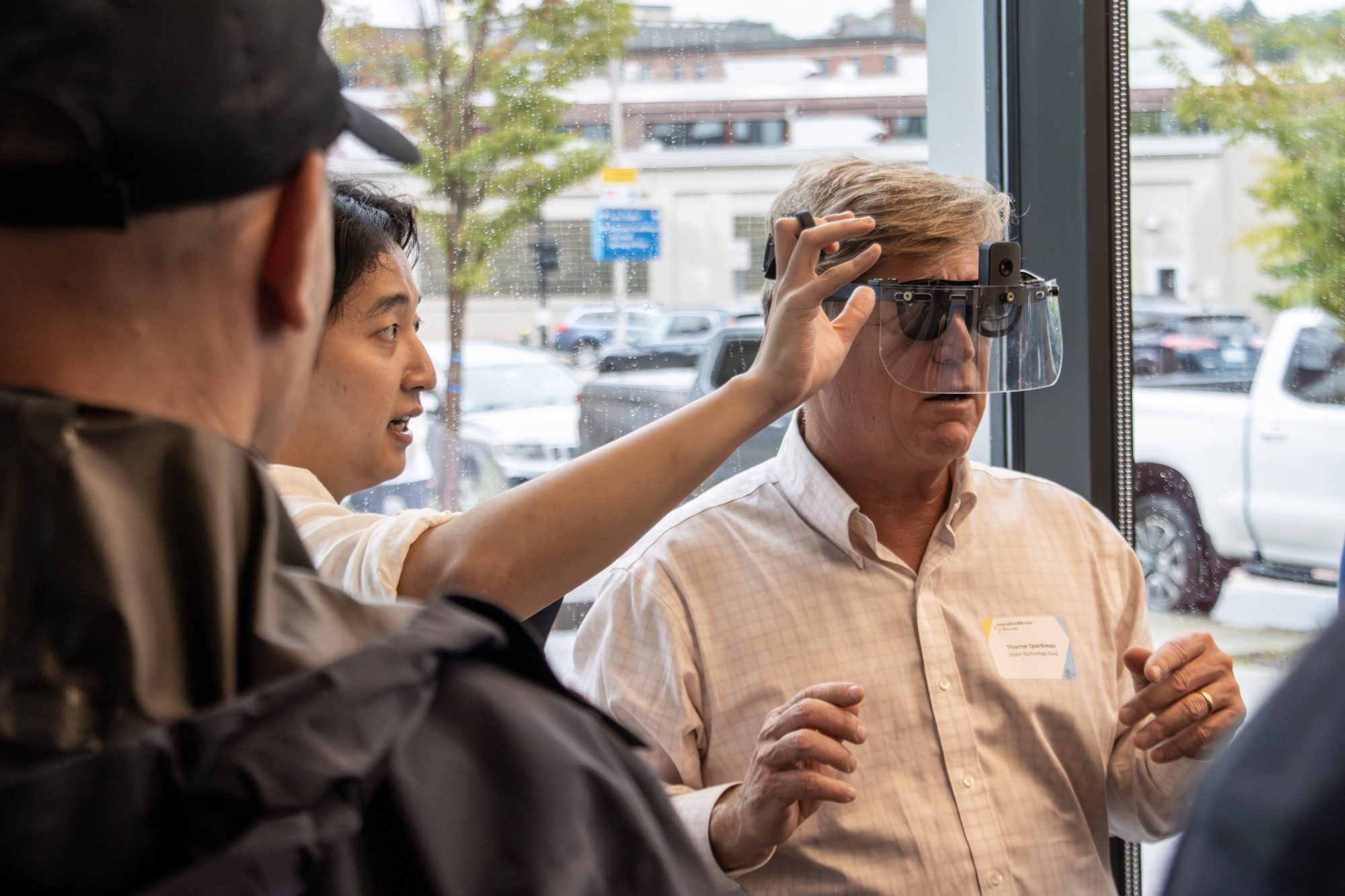
This year’s event spotlighted 18 early-stage startups led by Brown faculty, students, and alumni, spanning Alzheimer’s therapeutics, AI-driven healthcare, and sustainable materials innovation. Their technologies range from antisense drugs and bio-responsive wound dressings to voice-AI medical billing, wearable AR for manufacturing, advanced battery materials, and next-generation gene and cell therapies.
Together, these ventures reflect Brown’s expanding ecosystem of faculty-founded companies translating cutting-edge research in life sciences, engineering, and artificial intelligence into tangible impact. Supported by Brown Technology Innovations in the University’s Division of Research, Brown faculty are transforming pioneering ideas into ventures that move discoveries from the lab to the marketplace.
Shaping the future of AI
Among the fields where Brown’s innovation leadership is accelerating most rapidly is artificial intelligence. Brown was recently recognized as a national leader in the field, receiving a $20 million National Science Foundation grant in July to establish the AI Research Institute on Interaction for AI Assistants (ARIA).
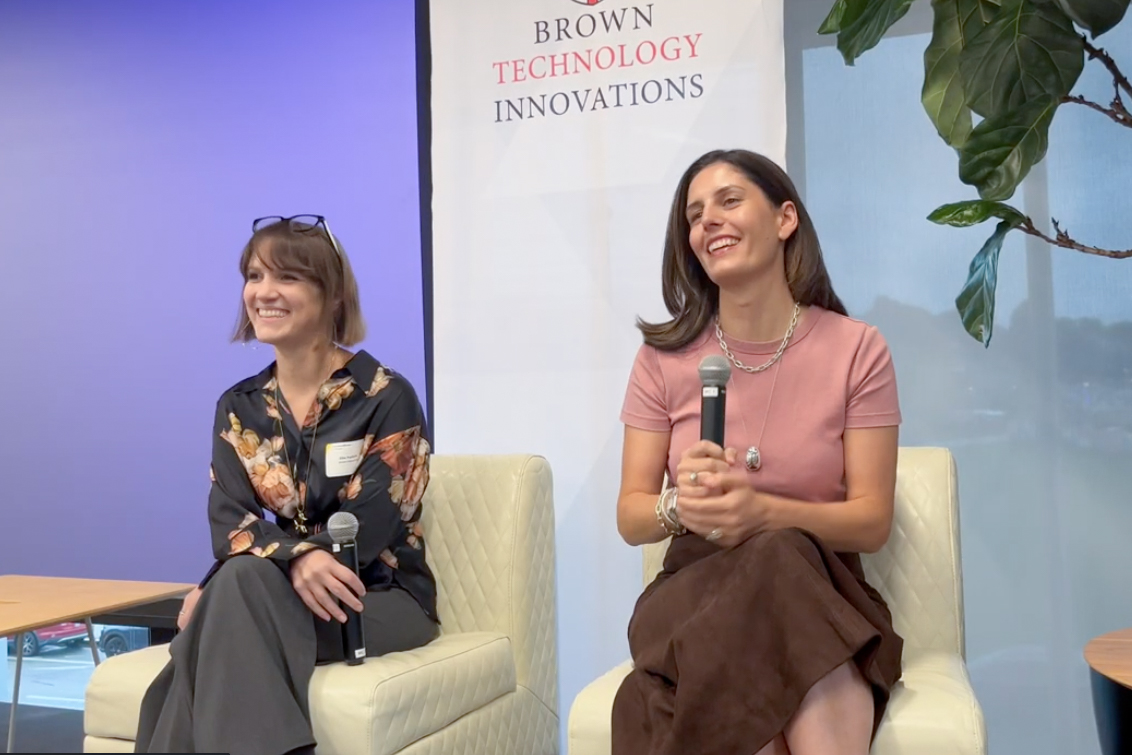
Ellie Pavlick, associate professor of computer, cognitive, and psychological sciences and principal investigator on the NSF grant, led a Showcase panel on AI and Mental Health with Soraya Darabi, co-founder and managing partner at TMV. The discussion—recorded live for the Rapid Response podcast—explored how generative AI is reshaping human relationships and mental health care.
“Among the many fields disrupted by generative AI, mental health and the personal relationships we build with AI agents are among the most complex,” said Bob Safian, host of Rapid Response. “A recent study showed that one of the major uses of ChatGPT is for mental health support, which makes many people uneasy.”
Pavlick emphasized the need for scientific leadership in this rapidly evolving space. “This is happening—people are already turning to chatbots as therapists,” she said. “ARIA’s goal is to provide independent scientific and intellectual leadership on how to approach these challenges—how to decide what the technology can and can’t do, how to build it safely, and how to develop the shared understanding and vocabulary society needs to use it responsibly.”
Michael Littman, Brown’s new associate provost for artificial intelligence, noted that ARIA’s focus is especially timely. “The NSF AI Institute’s work on using AI agents to assist people—particularly in mental health—is incredibly relevant,” he said. “Brown is now well positioned to be a world leader in understanding and addressing the implications of these technologies.”
Investing in university startups
That same focus on translating discovery into opportunity continued in a conversation with leading venture capitalists. This year’s Showcase featured a Venture Capital Panel on University Startups: Investment Opportunities & Strategies, with Abhijit Ganguly, managing director of TekVentures/Teknor Apex; Dave Greenwald, managing director of Deerfield Management; and Marc Singer, co-founder of Osage University Partners.
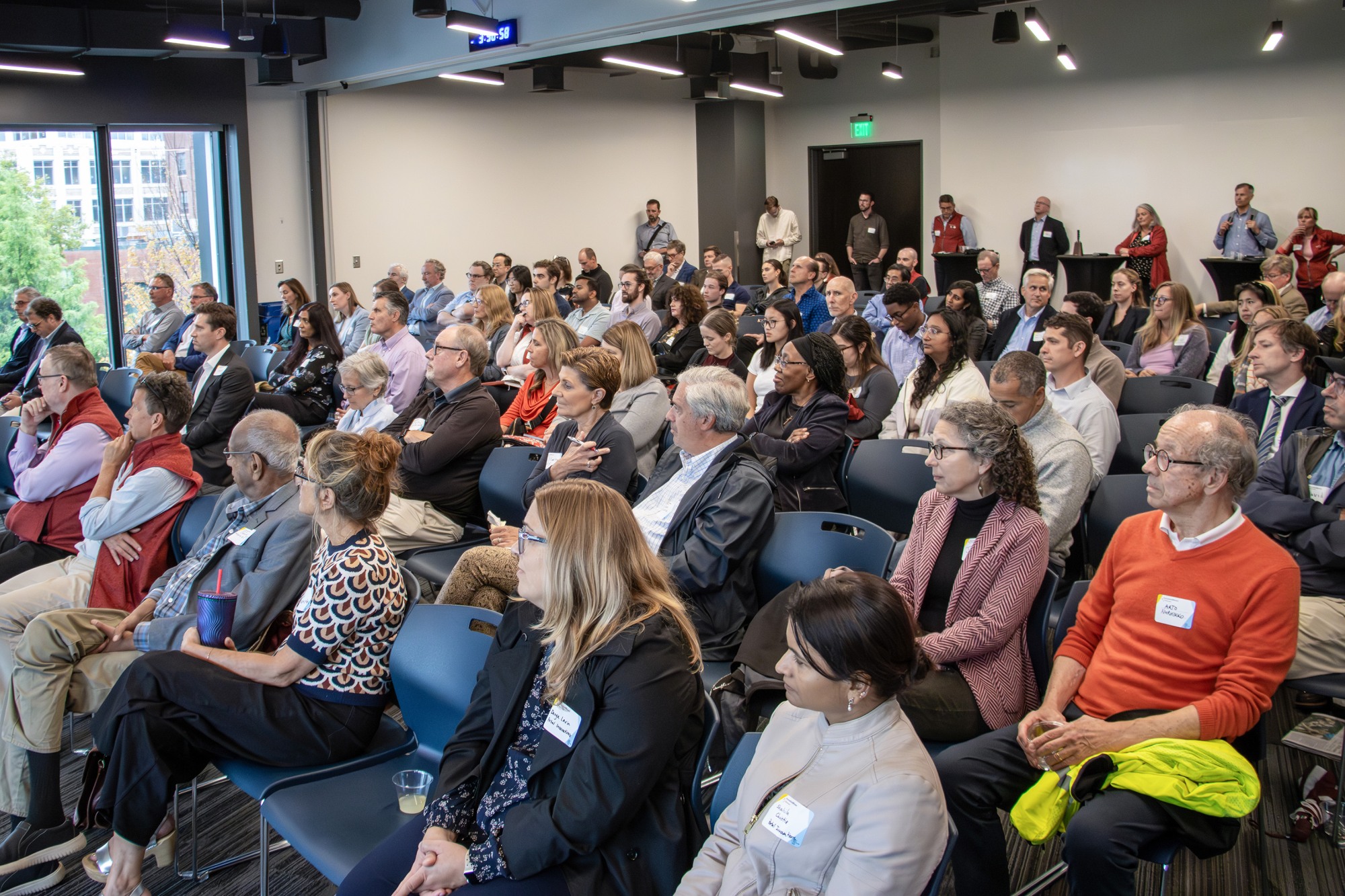
Panelists emphasized the pivotal role universities play in fueling innovation in biotechnology and advanced materials—pointing out that roughly half of biotech firms that have raised $100 million or more in the past 15 years originated from academic research. Greenwald described how Deerfield rapidly funds promising healthcare discoveries to help them reach patients, while Singer highlighted the surge of AI-native startups generating meaningful revenue at unprecedented speed.
Ganguly noted that sustainability and artificial intelligence are transforming materials science, with startups driving what he called “the next century of innovation.” He also underscored Teknor Apex’s commitment to partnering with young companies to accelerate sustainable solutions.
Across the discussion, panelists returned to a common theme: perseverance. They encouraged founders to stay the course through the long timelines and inherent risks of drug development and materials breakthroughs—and to keep engaging investors, foundations, and partners along the way.
Innovation awards
The day concluded with recognition of the innovators, inventors, and startups turning Brown research into real-world impact. Each year, BTI honors the inventors, innovations, and companies that have achieved the most progress and impact over the past year. Deputy Vice President for Research Marty Scholtz presented this year’s awards.
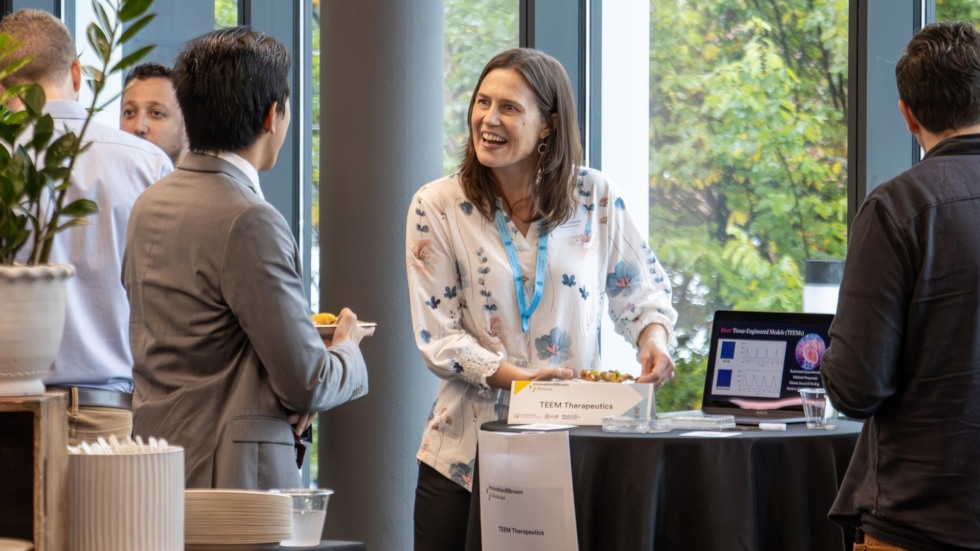
Kareen Coulombe, associate professor of engineering, during the Venture Showcase.
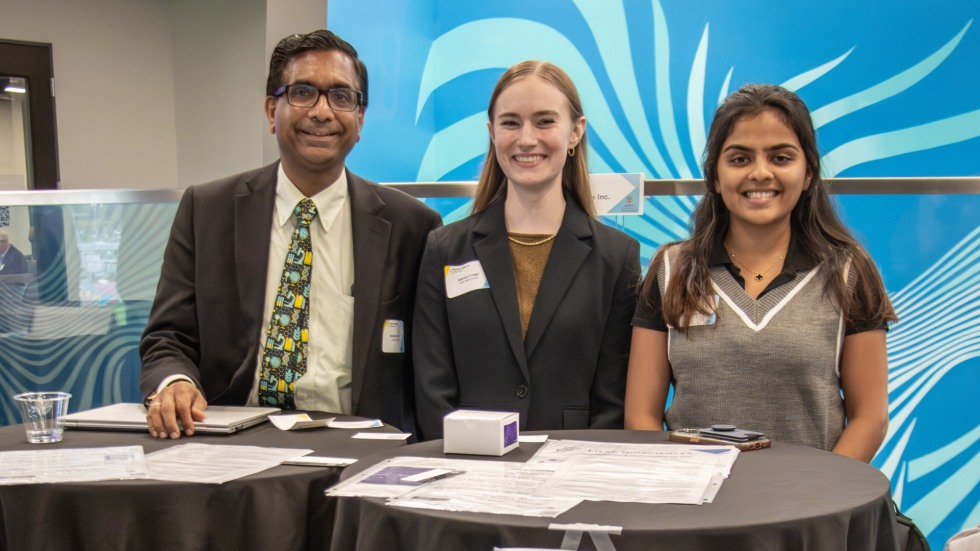
Lilac Biosciences Inc. during the Venture Showcase.
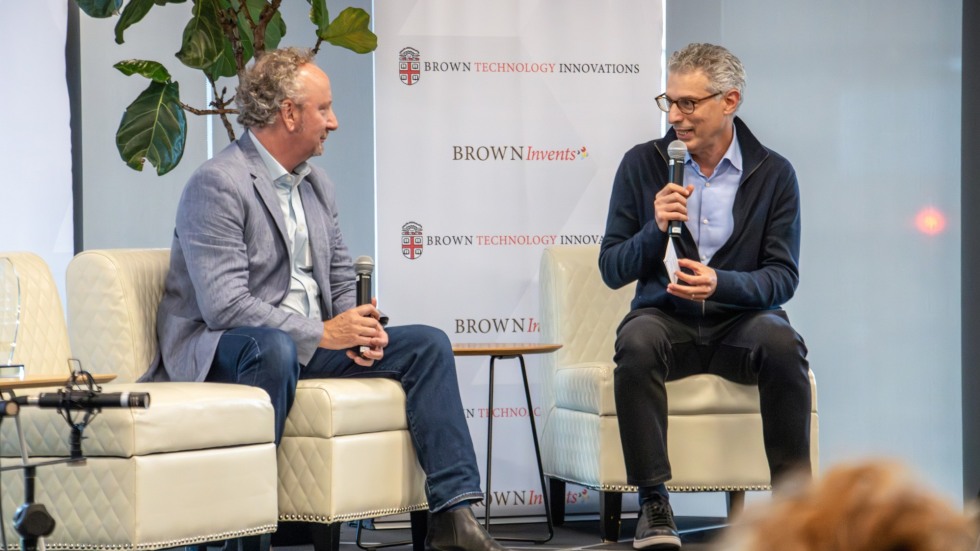
Mark Blyth and Bob Safian during the Fireside Chat.
Startup of the Year
“Beginning with our startups, we would like to first recognize the newly formed companies that licensed Brown-developed intellectual property during the 2025 fiscal year,” said Scholtz.
The four companies include: CareCrowd, a healthcare data management platform transforming how provider data is collected, validated, and accessed; Tinos Therapeutics, developing FTO inhibitors for cancer; Homer Therapeutics, creating siRNA-based inhibitors of HDAC7 for cancer applications; and Ethylium, advancing a non-oxidative catalyst-free method to capture carbon.
The Startup of the Year recognizes a company that has spun out of Brown within the past five years and demonstrated the most progress within the past fiscal year.
“This year we’d like to recognize Adept Materials,” said Scholtz. “Adept’s technology mimics a leaf’s ability to regulate temperature and moisture through microscopic capillaries and a vapor diode mechanism, allowing water vapor to move more easily in one direction. Adept recently closed on a $4.6 million seed round and is preparing to launch its first consumer product, a premium interior paint and primer system called Lilypad that incorporates the company’s proprietary moisture control.”
Derek Stein, founder and CEO of Adept Materials and professor emeritus of physics at Brown, invented the company’s core material technology at Brown and has attended each year of the Showcase. “I’ve seen the event get bigger and more sophisticated as time has gone on,” said Stein. “There are now many more people obviously interested in entrepreneurship than when it began and pitches are getting more refined. It seems like there’s something in the air now at Brown where entrepreneurship is a real goal that many people have.”
Inventor of the Year
BTIs Inventor of the Year is awarded to a faculty member who has had the most engagement with BTI during the past year and has seen the greatest patenting success.
“This year we would like to recognize Arto Nurmikko,” said Scholtz. “Arto is one of our most prolific inventors, and in the last year alone he filed one new international patent and had four patents issued. He was also recently invited by the U.S. Patent Office to present one of his patents to a group of over 300 patent agents as part of the Patent Examiner's Technical Training Program.”
“There’s an intersection between intellectual curiosity, innovation, and wanting to make an impact,” said Nurmikko. “And it’s the last of these three that leads to a path toward filing patents and other efforts beyond traditional grant-based research.”
Innovation of the Year
One of the event’s most anticipated moments came when finalists for Innovation of the Year took the floor to deliver rapid-fire, three-minute pitches before a live audience, which voted in real time to select the winner. The finalists—Kareen Coulombe, Stephanie Jones, and Ryan O’Rourke—were selected from eight standout innovations based on disclosures received in the past fiscal year.
Coulombe, associate professor of engineering, opened with a question: “How many of us have felt our heart skip a beat or race from stress or exertion? What if that became recurrent? It's not unusual,” she said, noting that the risk of developing a cardiac arrhythmia increases after age 50. Coulombe’s team has developed “bioelectric threads”—thin strands of stem cell-derived heart tissue that carry electrical signals to help the heart beat in sync. In lab tests, the threads reconnected heart tissue and restored rhythm. The technology could one day provide a new way to repair hearts damaged by disease or defects, noted Coulombe, saying they are poised to take this technology to the clinic.
Next, Stephanie Jones, professor of neuroscience, described her lab’s work developing computational tools to understand how the brain gives rise to thoughts and actions. “We use this knowledge to develop new therapeutics for neuropsychiatric disorders—one of the greatest health crises of our time,” she said. Her team is creating technology to personalize transcranial magnetic stimulation (TMS) by tailoring stimulation to each person’s brain. Their startup, Para Solutions, aims to bring this brain-simulation software to market to improve treatment for depression, OCD, and anxiety.
Rounding out the pitches, Ryan O’Rourke, a postdoctoral researcher in molecular biology professor Alvin Huang’s lab and scientific co-founder of Acre Therapeutics, presented a novel approach to treating Alzheimer’s disease. “We use human iPSC models to study the interplay between genetics, cellular pathways, and brain pathology in Alzheimer’s,” he explained. O’Rourke noted that while toxic amyloid and tau proteins accumulate in the brain, “there have been no FDA-approved therapeutics targeting tau, even though tau pathology correlates more strongly with cognitive decline.”
Acre’s therapy targets the BIN1 gene, which helps tau spread between brain cells. By blocking this process without disrupting normal function, the team hopes to slow disease progression. Supported by the National Institute on Aging, Acre aims to advance this discovery to help the more than seven million people living with Alzheimer’s.
After the finalists delivered their pitches, attendees cast their votes in real time—ultimately selecting Ryan O’Rourke and Alvin Huang for their therapeutic development for Alzheimer’s disease.
“Winning the award is a vote of confidence from people with decades in the field,” said O’Rourke. “In addition to helping us when we have conversations with investors or partners, it’s going to motivate other researchers to think outside the box and consider how discoveries can be transformed into commercializable technologies.”
This year’s Showcase captured the spirit of innovation that defines Brown—where ideas become impact, discoveries become ventures, and collaboration fuels the next generation of breakthroughs.
—
Showcase sponsors included Ernst & Young; Banner Witcoff; The Angel Nest Podcast; K&L Gates; Rapid Response Podcast; Rhode Island Life Science Hub; Tarolli, Sundheim, Covell & Tummino LLP; and Teknor Apex.
Showcase Photo Gallery
View the full photo gallery from the third annual Innovation@Brown Showcase.